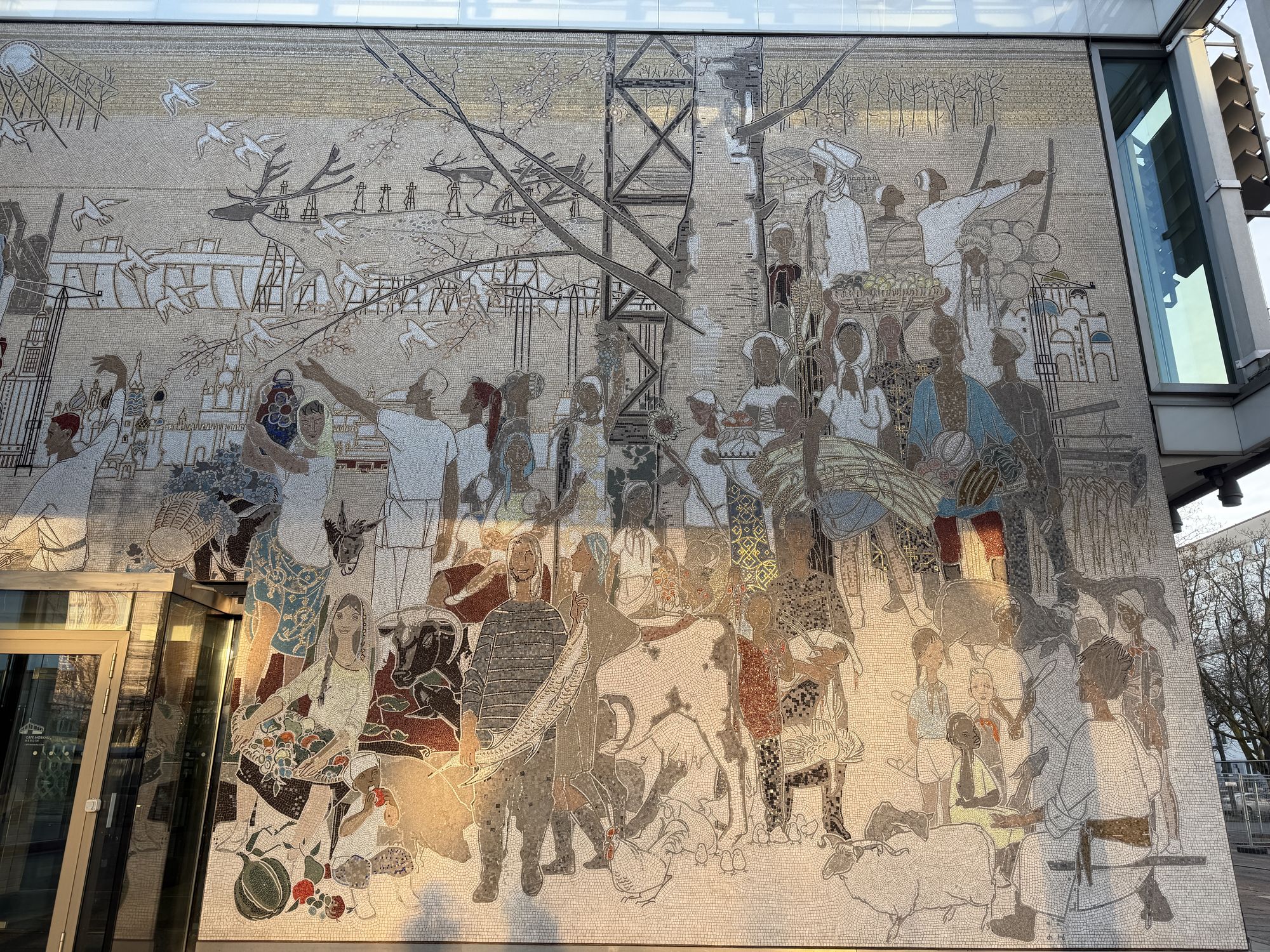
Café Moskau on Karl-Marx-Allee is one of the finest surviving examples of DDR modernism — a purpose-built restaurant and cultural space that opened in 1964 as a symbol of Soviet-East German friendship and socialist internationalism. Designed by Josef Kaiser, the building's distinctive low horizontal massing, the deep roof canopy, and the monumental globe on its facade make it immediately recognisable: a building that understood its role as backdrop to socialist street life and played it fully.
Karl-Marx-Allee itself was the showpiece boulevard of East Berlin — a monumental axis lined first with Stalinist wedding-cake architecture and then, further east, with the modernist social housing blocks of the late DDR period. Café Moskau anchored its section of the street as a gathering point, a place of collective consumption and public culture. It was always for showing as much as for eating. Now a club and event space, it occupies its history with characteristic East German seriousness.