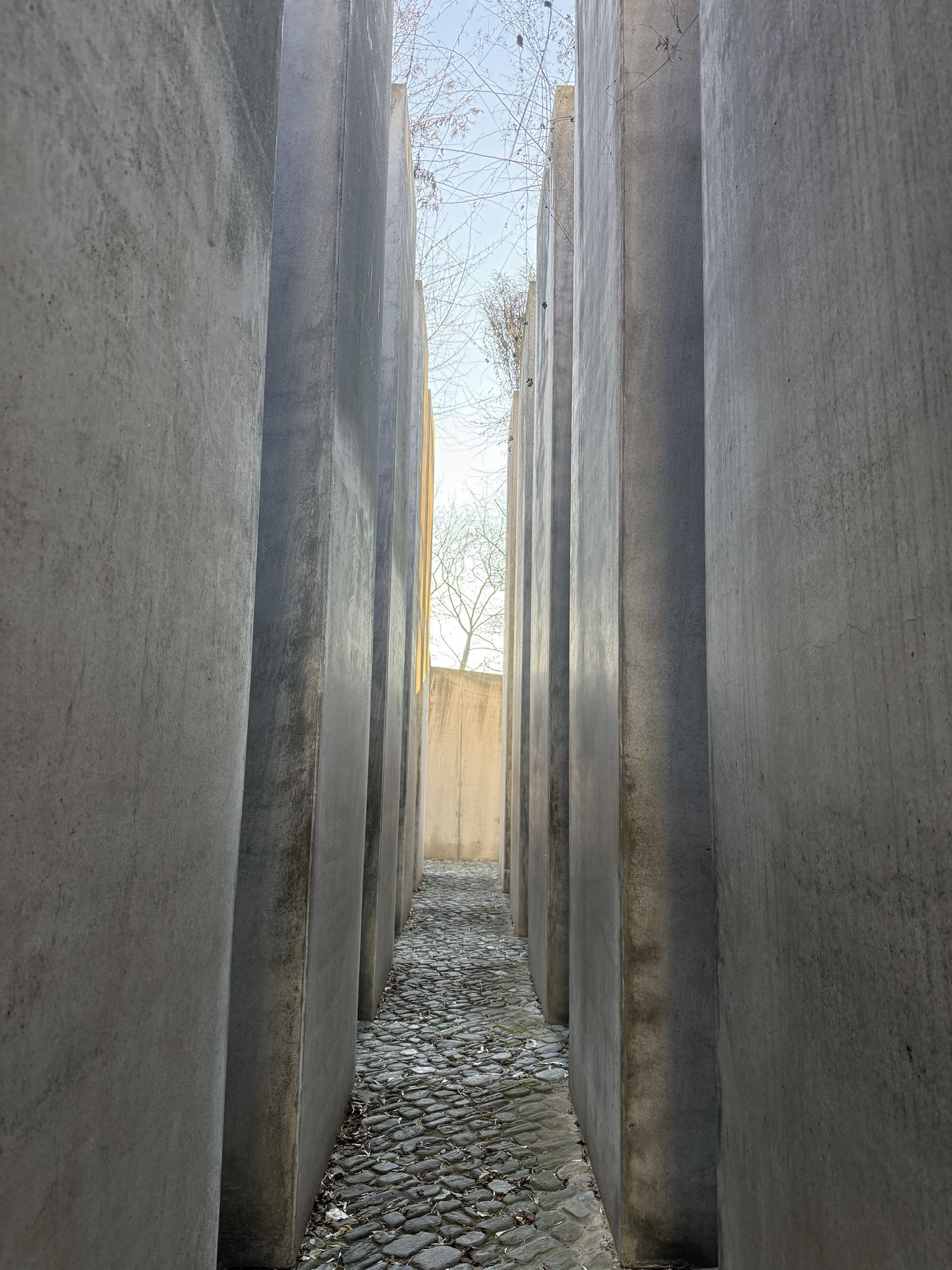
The Jewish Museum Berlin, designed by Daniel Libeskind and completed in 1999, is one of the most charged pieces of architecture built in the twentieth century's final decade. The building's zinc-clad exterior is a jagged, lightning-bolt form of slashed windows and acute angles — a plan derived, according to Libeskind, from a deformed Star of David and from addresses of Berlin Jews who were killed or forced to emigrate. The exterior gives nothing away easily. It demands that you look at it differently from every angle.
Inside, the Voids — empty spaces of raw concrete that cut through the building from basement to roof but cannot be entered — are the most powerful architectural device. They represent what cannot be exhibited, what cannot be replaced, what was destroyed. The Garden of Exile, the Holocaust Tower, the tilted floors of the axes: the building uses architecture to produce disorientation, incompleteness, the sensation of a history that cannot be fully accommodated. It is a building that understands what museums are for and pushes that understanding to its limit.