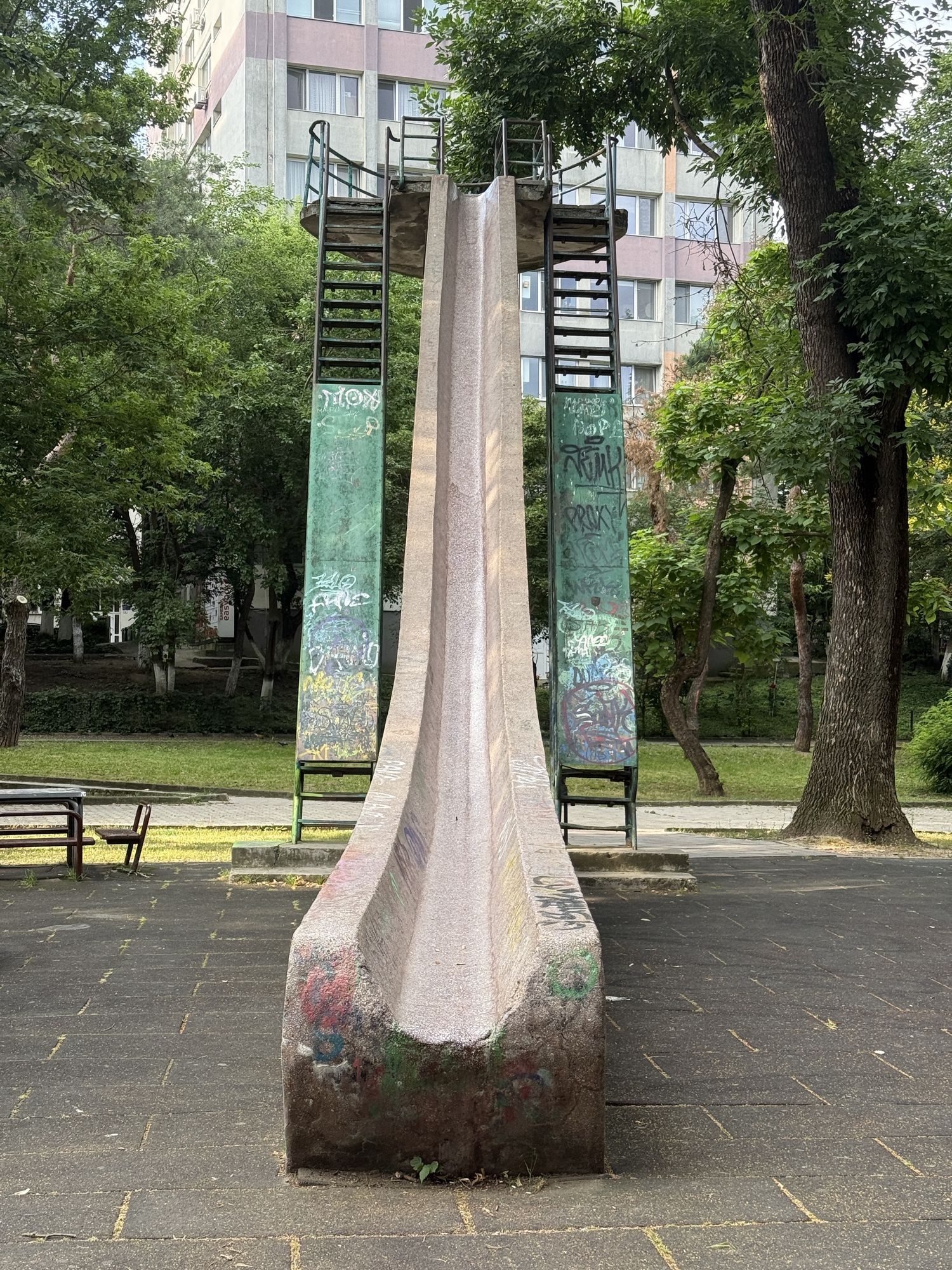
The concrete slide structure in Floreasca Park is one of Bucharest's most characterful pieces of Soviet-era public space design — a stepped concrete playground slide that applies the vocabulary of brutalism to children's play equipment, with the same formal conviction and material honesty that the era brought to its most ambitious institutional buildings. Concrete in the park, concrete for the children: the logic is entirely consistent.
Soviet and communist bloc playground design of the 1960s through 1980s had a distinctive aesthetic — structures that were built to last, made of the same concrete that was reshaping the city around them, and designed with a formal ambition that treated children's play as worthy of serious architectural attention. These structures are now rare survivals across Eastern Europe, most having been removed as cities upgraded their public spaces to Western safety standards. The Floreasca slide persists in a park that has otherwise been modernised, an anomaly that has acquired the quality of an outdoor sculpture — which, in a sense, it always was.