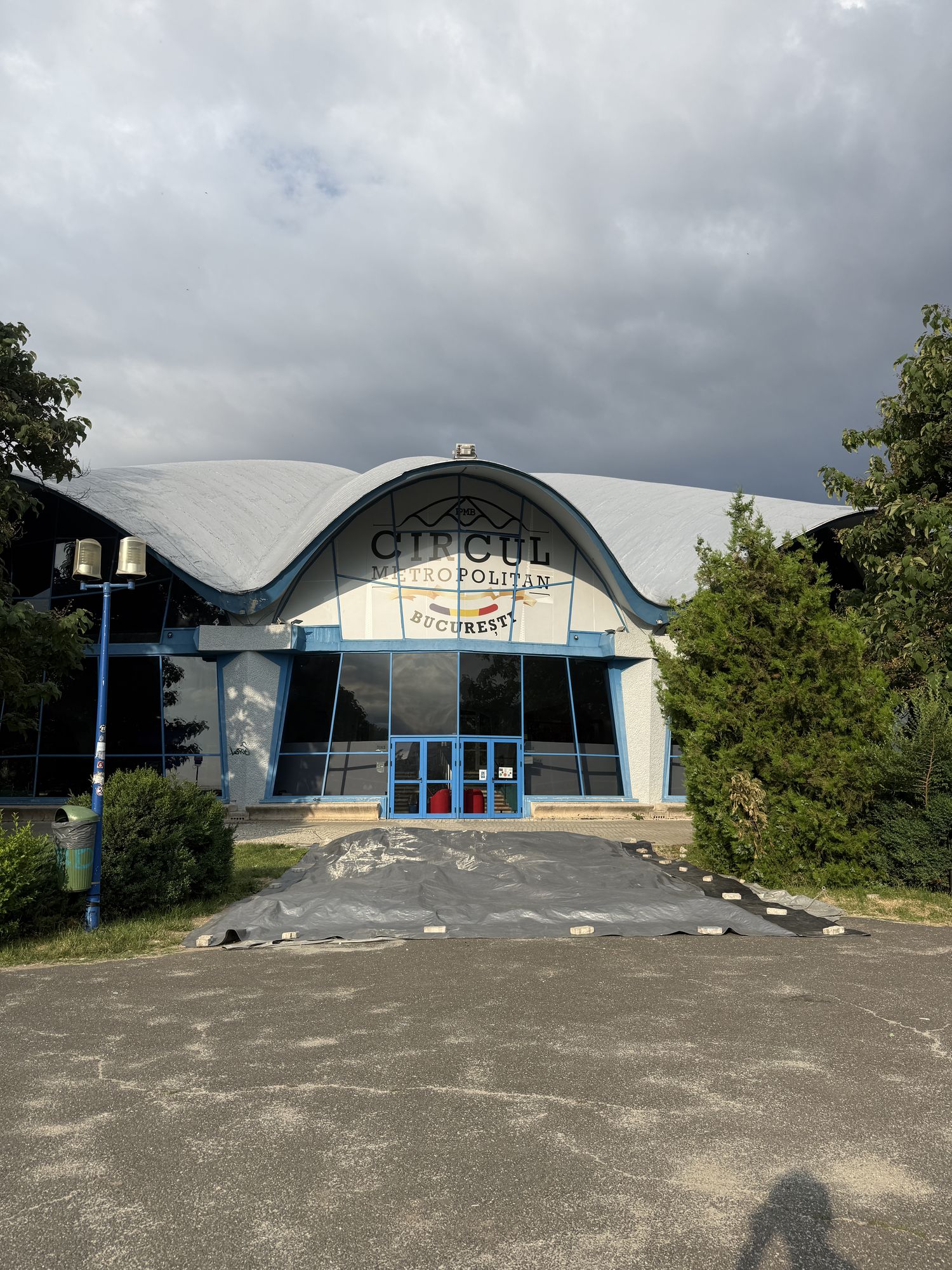
The Metropolitan Circus — Circul Metropolitan Bucuresti — was built in 1960 as part of the communist government's investment in public cultural infrastructure. Circuses held a special place in socialist cultural policy: they were mass entertainment in the most direct sense, accessible to all social classes and age groups, requiring no special cultural education to enjoy. The Soviet Union had developed the most technically ambitious state circus tradition in the world, and Romania's communist government invested in a permanent purpose-built home for this tradition in the capital.
The building's circular plan, large-span roof, and modernist exterior are characteristic of the circus architecture of the 1950s and 1960s across the Eastern bloc — practical solutions to the technical demands of a large-span performance venue, executed in the architectural vocabulary of socialist modernism. The Circul Metropolitan has been in continuous operation since opening, surviving the revolution and the transition to market economy. It still operates as a circus, hosting performances in the tradition for which it was designed — which is to say, it has done what most buildings of its type across the region could not: simply kept going.