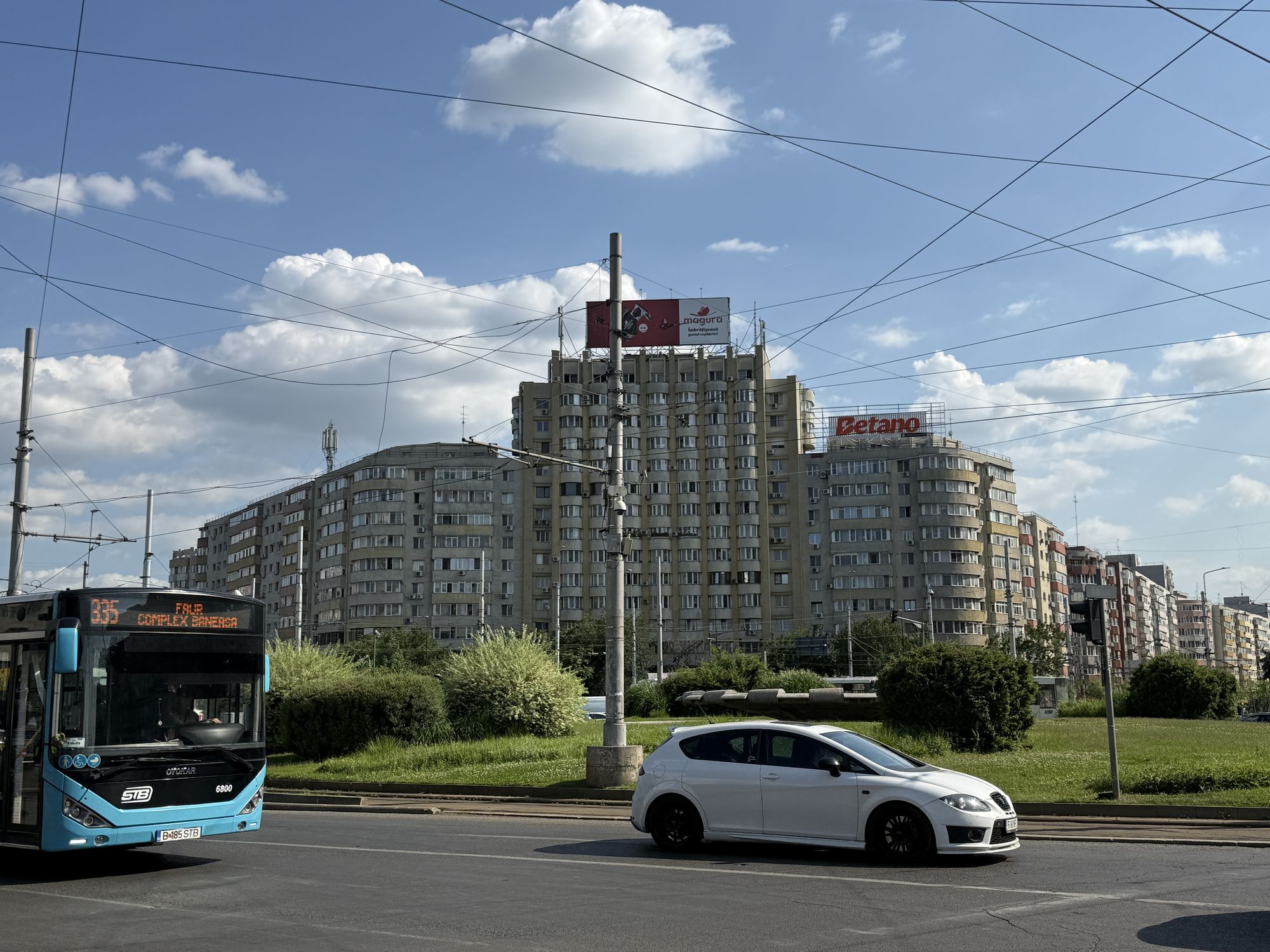
Obor is one of Bucharest's most authentic working-class districts — a neighbourhood defined by its large market, the Hala Obor covered market hall, and the surrounding communist-era apartment blocks that house the families who have lived and traded here for generations. The district sits in the northeast of central Bucharest, away from the monumental boulevards and tourist infrastructure of the city centre, and it looks it: the buildings are older, the surfaces are rougher, and the energy is commercial rather than ceremonial.
The communist-era blocks around Obor represent the ordinary face of socialist housing in Romania — not the showpiece projects but the practical mass housing that the Ceausescu regime built across the city in vast quantities to house the workers drawn to Bucharest by industrialisation. These blocks are austere, repetitive, and built to a standard that prioritised quantity over quality. They are also home to hundreds of thousands of people, and the life that happens in the spaces between them — the market stalls, the corner shops, the informal economy — gives the district a vitality that the architects of the nearby Palace of Parliament could never have planned.