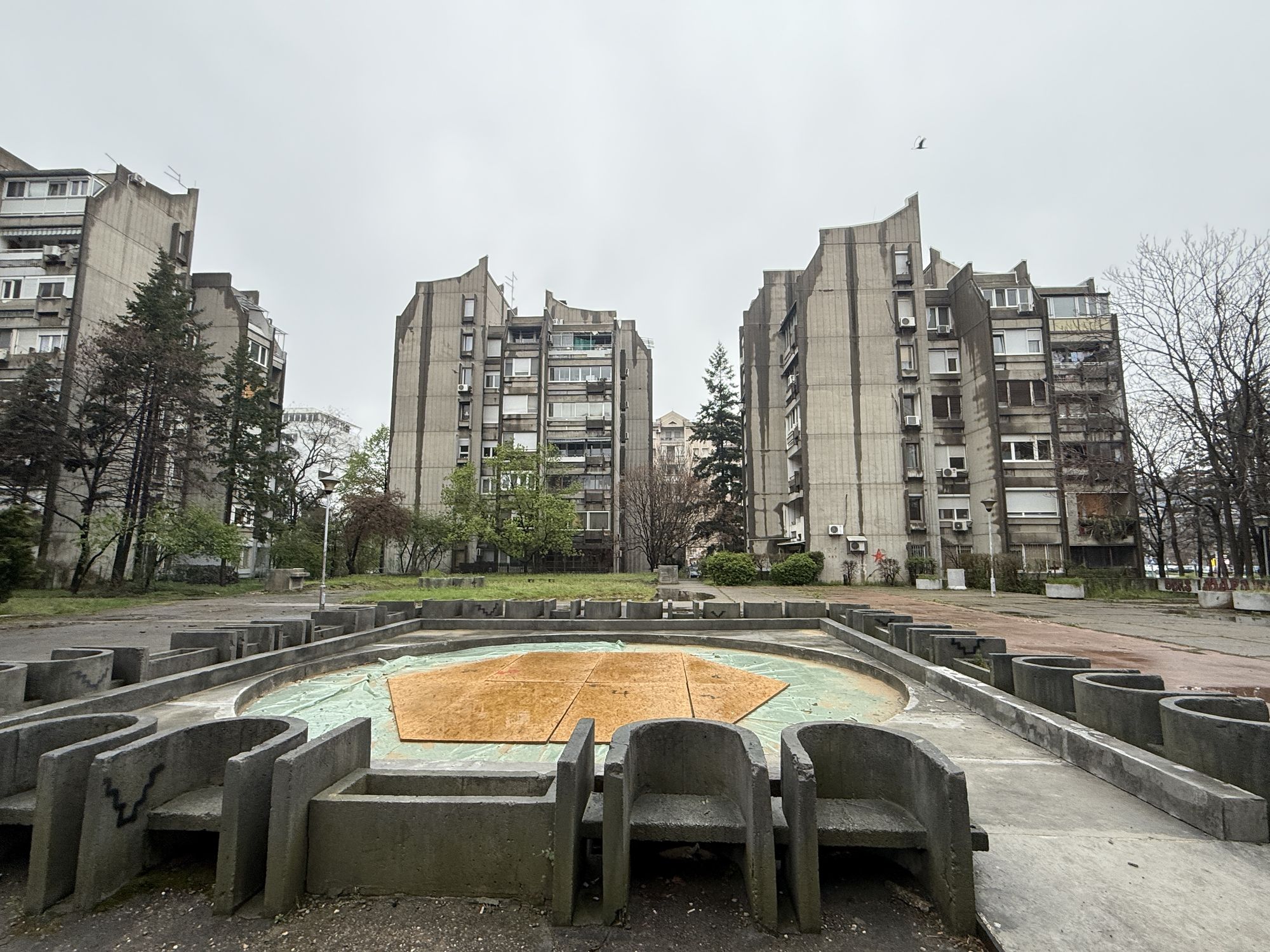
Blocks 22 and 23 are part of the vast residential grid of New Belgrade — the socialist planned city built on reclaimed marshland across the Sava River from old Belgrade. The "blocks" are not individual buildings but urban units: entire neighbourhoods defined by number, each containing apartment towers, green space, schools, and commercial ground floors arranged according to the modernist planning principles of the time.
New Belgrade was conceived as a tabula rasa, an opportunity to build the new socialist city from scratch without the constraints of inherited urban fabric. The results were extraordinary in their ambition and contradictory in their outcomes: vast open spaces between towers that were meant to be democratic parkland but often became difficult voids, and a scale of concrete repetition that was simultaneously impressive and alienating. Walking through the blocks today is to inhabit the residue of a particular ideological moment — one that took density and equality seriously, even if it did not always achieve them.