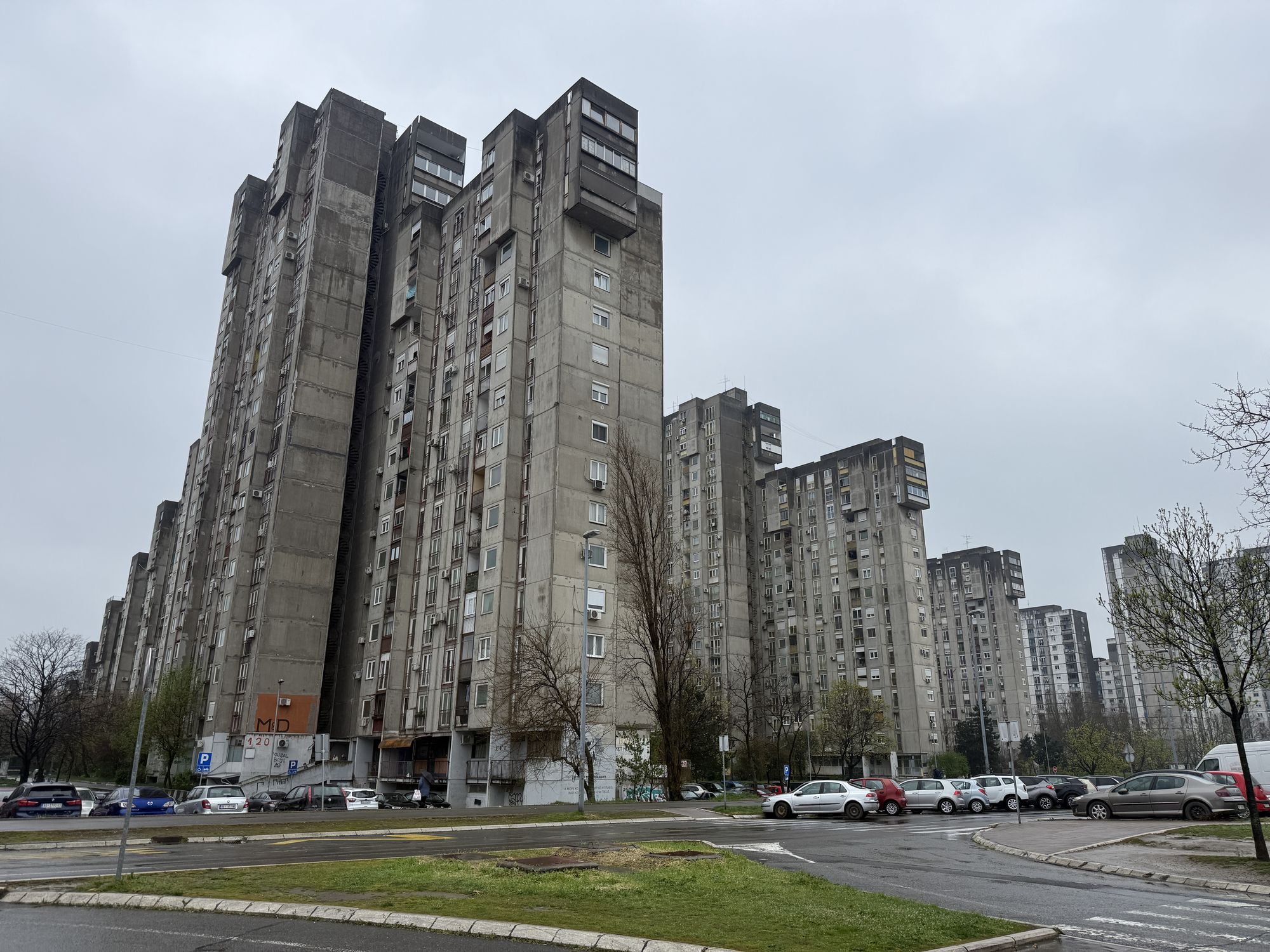
Blocks 62 and 63 sit in the southern section of New Belgrade, part of the same numbered-grid urbanism that defines the entire district. Like their counterparts throughout New Belgrade, these blocks house thousands of residents in a landscape of open green space and concrete towers that simultaneously promises and withholds the city.
What makes New Belgrade's blocks worth looking at is not any individual building but the aggregate: the repetition, the scale, the logic of the plan made visible. The number system is itself a kind of architecture — an administrative naming that strips away neighbourhood identity in favour of coordinate logic. That so many Belgraders identify strongly with their block, that "where are you from?" often means "which block?", suggests that identity survives and adapts even within the most rationalist of built environments.