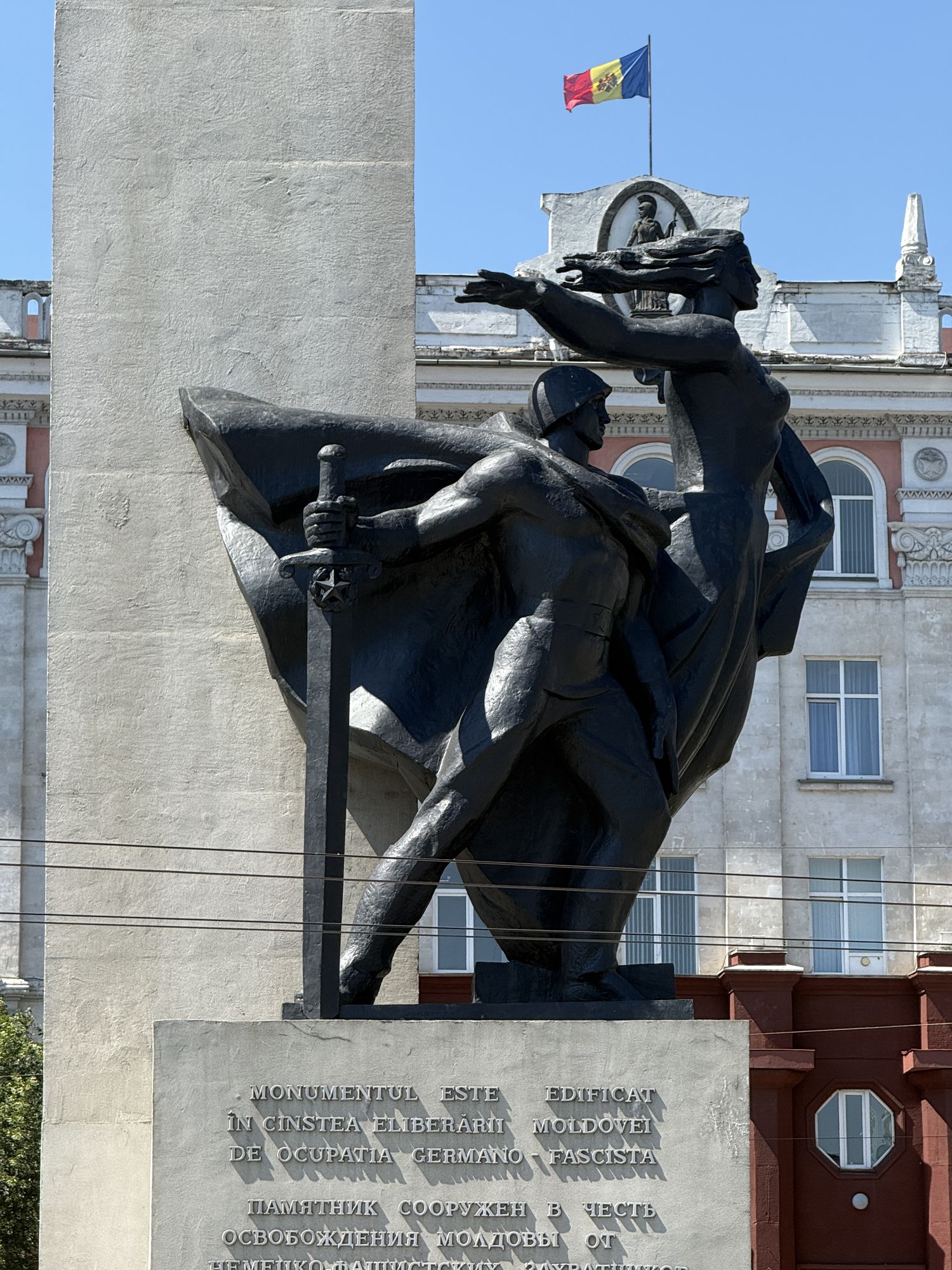
The Liberation Sculptural Composition commemorates the liberation of Chisinau from Nazi occupation on 24 August 1944 — the day Soviet forces drove out the German and Romanian troops that had held the city since 1941. The monument belongs to the canon of Soviet WWII memorial sculpture: heroic figures, dynamic poses, bronze or stone cast in the tradition of socialist realism that understood public monuments as instruments of historical narrative as much as commemoration.
In Moldova, these monuments occupy a complicated position in public memory. The events they commemorate — the defeat of fascism, the return of Soviet power — are simultaneously historical fact and ideological claim. The same forces that liberated Moldova from Nazi occupation re-imposed Soviet rule that would last until 1991. The sculptural composition stands where it has always stood, a physical object that carries different meanings depending on who is reading it and from which side of that history they come.