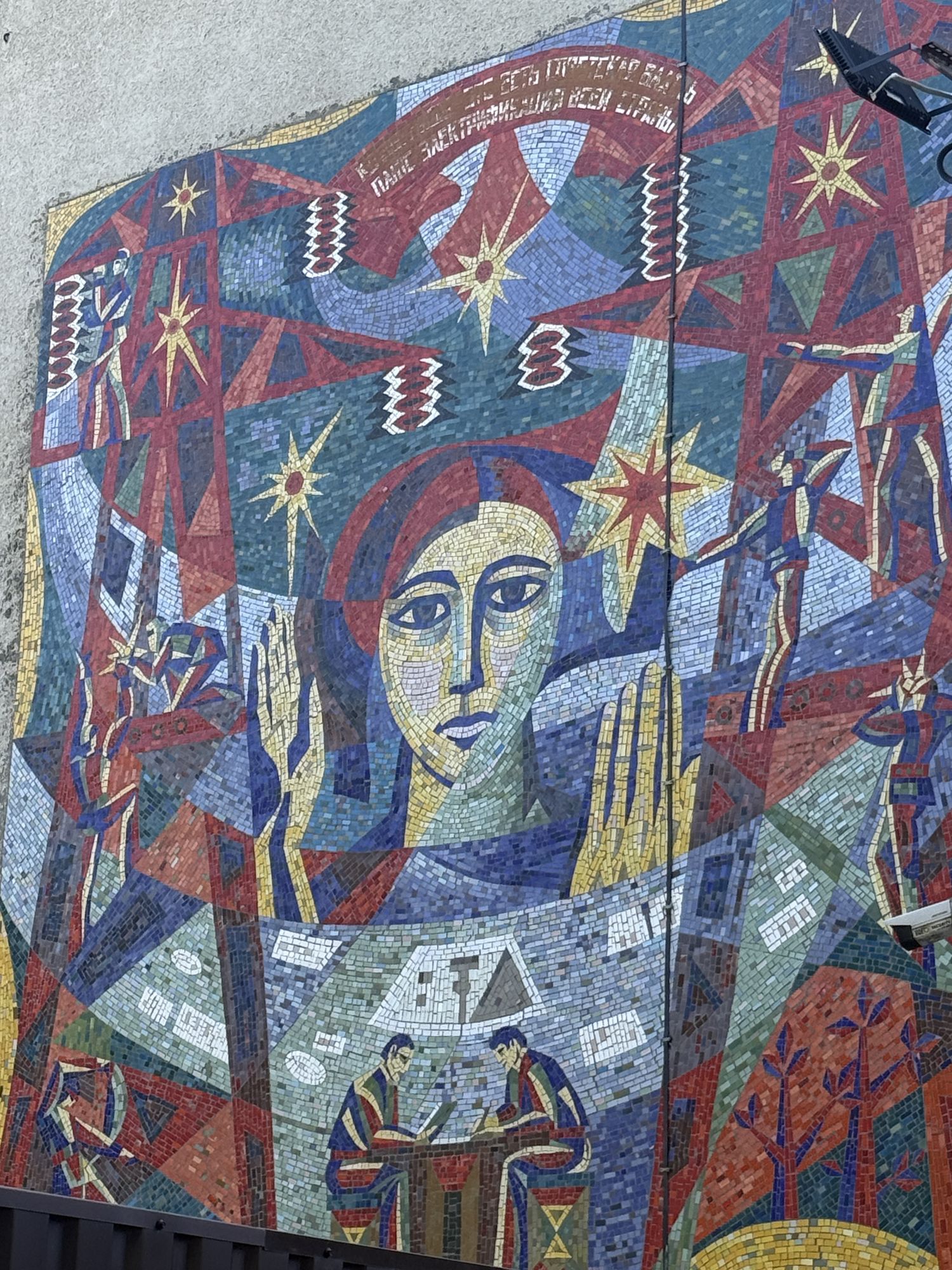
This mosaic depicts the Moldovan countryside — the vineyards, harvest landscapes, and agricultural scenes that were central to the Moldavian SSR's self-image and to Soviet art's representation of Moldova as a republic of abundance and fertility. The Moldavian Soviet Socialist Republic was one of the USSR's primary wine-producing regions, and the image of the grape harvest, the collective farm worker, and the fertile land recurred constantly in the republic's visual culture.
Placed on the exterior of a building in the Soviet urban fabric, mosaics like this served a dual purpose: they made functional architecture visually rich, and they inserted ideological content into everyday public space. The rural scene on an urban wall was a deliberate juxtaposition — a reminder of where the food came from and what economic system made it possible. Decades later, stripped of their original ideological context, these images read differently: as records of a landscape and a way of life, preserved in ceramic at the scale of architecture.