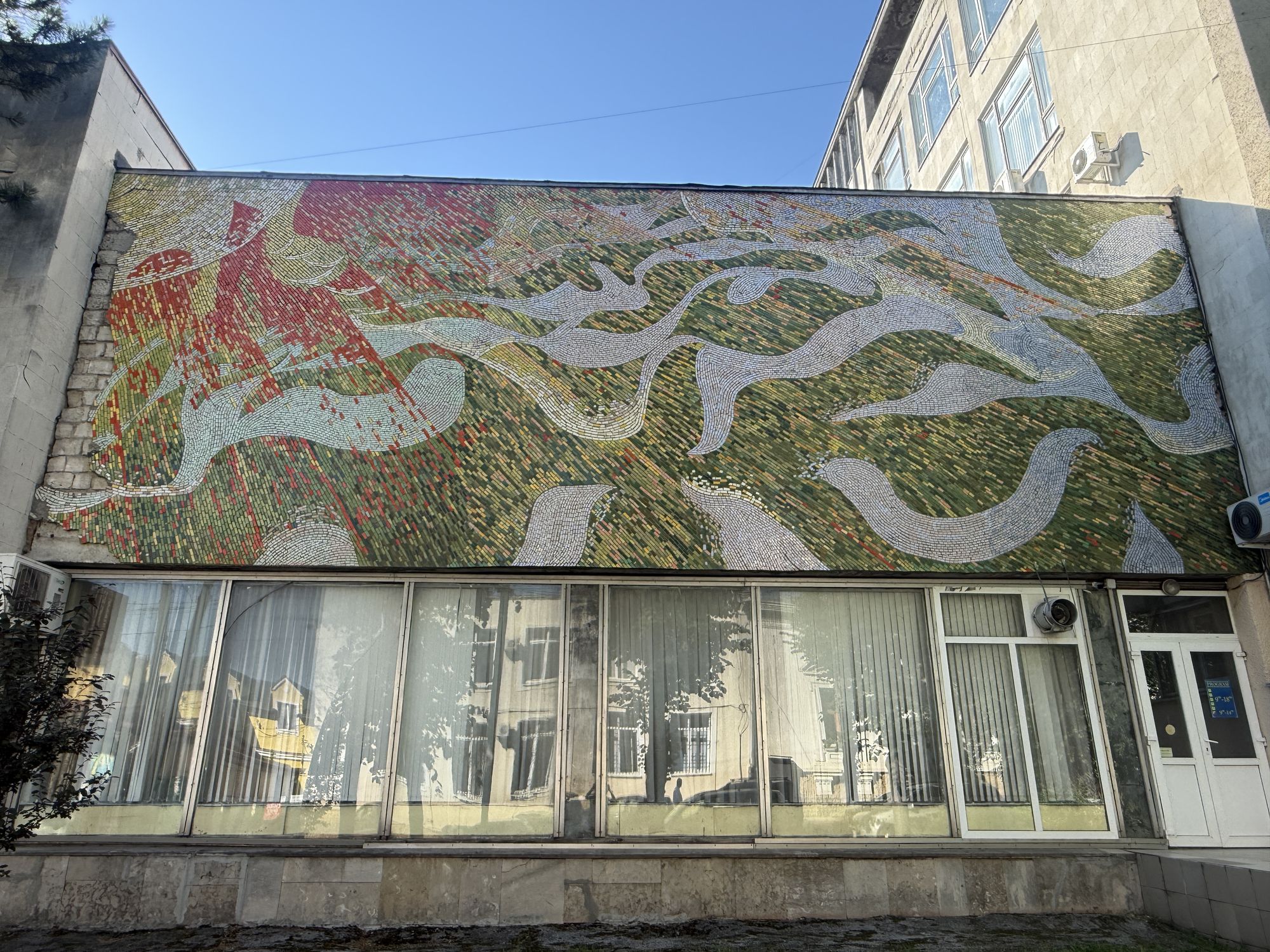
The Writers Union of Moldova — Uniunea Scriitorilor din Moldova — occupies a building adorned with one of Chisinau's more refined Soviet mosaics, one whose imagery reflects the institution it serves: literary culture, the Moldovan language, and the role of the writer in socialist society. The Soviet Writers Union was a powerful institution, the organisation through which literary production was managed, censored, and rewarded, and the buildings that housed its republican chapters were given cultural weight to match.
Mosaics on institutional buildings of this kind served a different function from those on industrial facilities or public transit hubs. Rather than celebrating labour or technology, they depicted culture — the act of writing, the transmission of language, the relationship between literature and the people it served. In a republic where language politics were particularly charged (Moldovan or Romanian? Cyrillic or Latin script?), the imagery of literary culture carried political weight that exceeded mere decoration. The mosaic endures on the building's exterior while the debates it embodies remain very much alive.