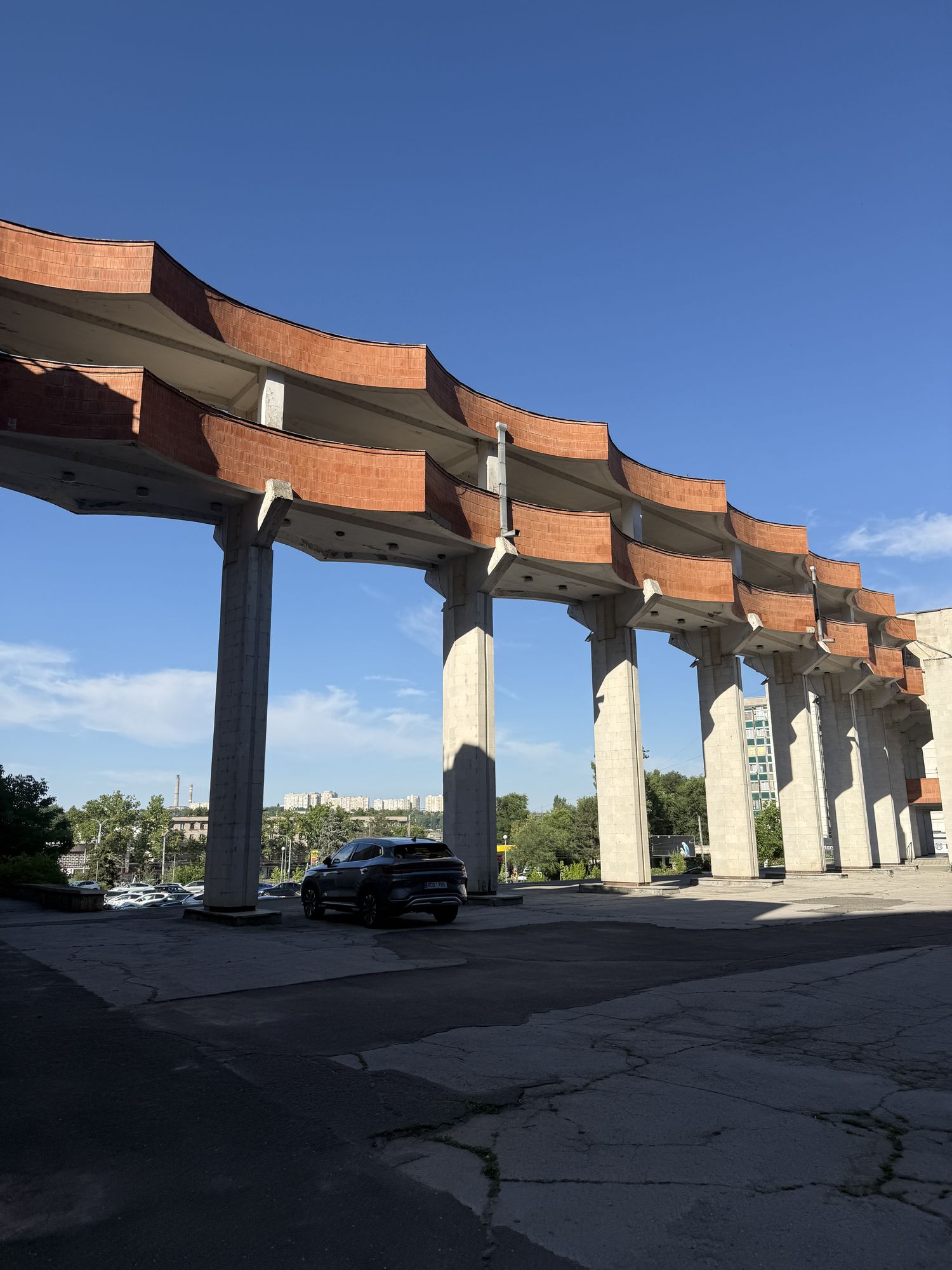
The Palace of Culture of the Railway Workers — Palatul de Cultura al Feroviarilor — is a Soviet-era cultural centre built to serve the workers of the Moldovan railway system. Palaces of Culture were one of the defining building types of the Soviet era: large multi-function facilities containing theatres, concert halls, cinemas, libraries, rehearsal rooms, and clubs, built for specific industries or localities to provide their workers with organised cultural life.
The railway workers' palace belongs to a generation of such buildings from the 1960s and 1970s that replaced the Stalinist architectural style with a cleaner modernist vocabulary: less ornament, more glass, concrete expressed directly. The exterior typically features the visual language of Soviet institutional architecture — horizontal banding, regular window grids, a certain monumental restraint. Inside, these buildings were once busy with amateur theatre groups, folk dance ensembles, and the organised cultural activities that the Soviet state considered an essential component of the worker's life outside the factory. Some continue to operate; others have been repurposed or stand empty.