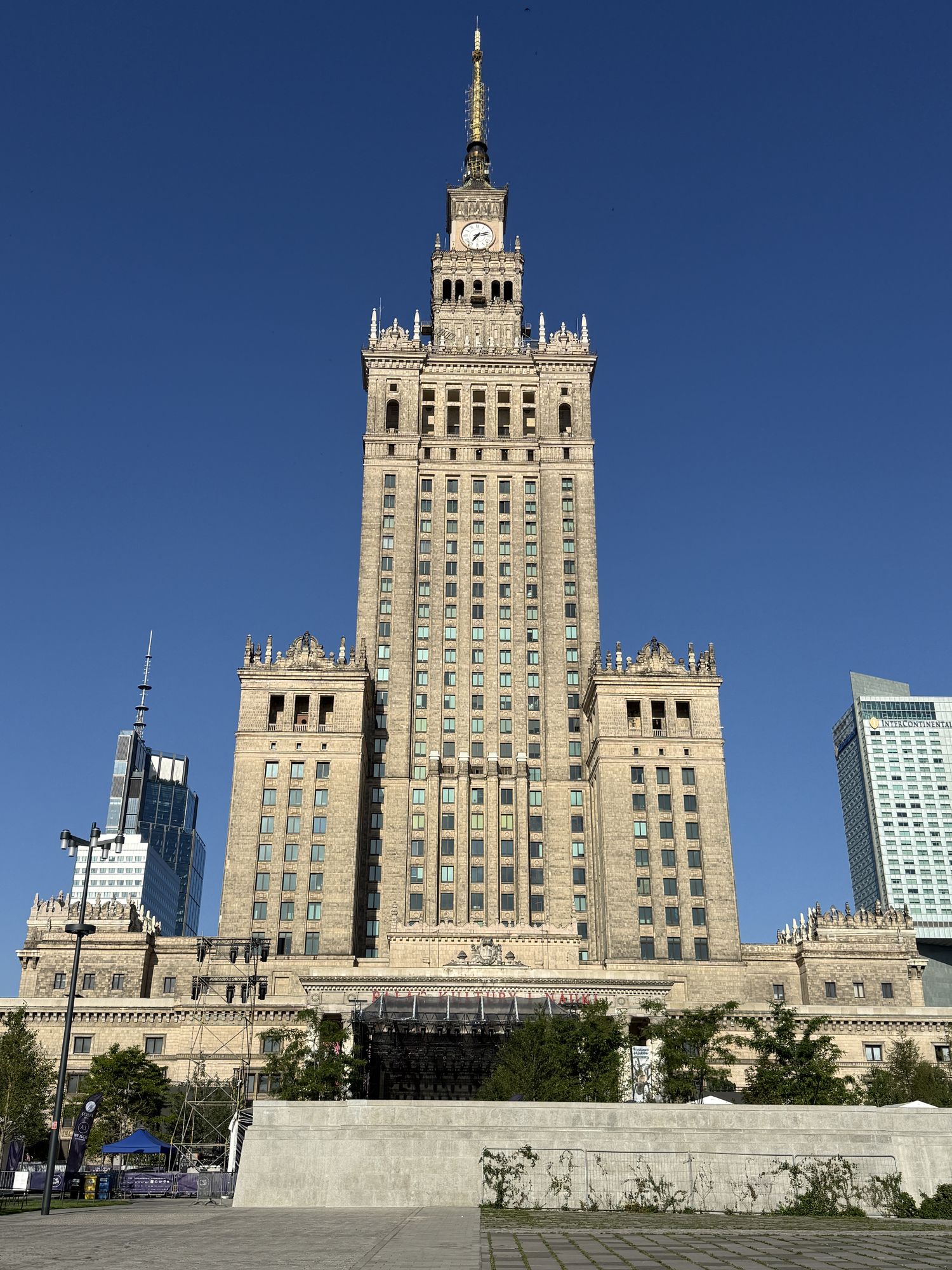
The Palace of Culture and Science (Pałac Kultury i Nauki, PKiN) is the tallest building in Poland — a 231-metre Soviet skyscraper designed by the Soviet architect Lev Rudnev and constructed between 1952 and 1955 as a gift from the Soviet Union to the Polish people. It is one of the seven Stalinist skyscrapers known as the Seven Sisters, of which six were built in Moscow; the Warsaw Palace is the only one built outside the Soviet Union.
The building was deeply controversial from the start. The Poles were given a gift they had not asked for, constructed in a style that made its origins unmistakably Soviet, on a site in the centre of a city that had just been destroyed and was being rebuilt. Many Poles regarded it as a symbol of Soviet domination. There were calls to demolish it after 1989, but it survived — too large and too embedded in Warsaw's skyline to remove. It now houses cinemas, theatres, universities, and the terrace observation deck at the top, and has been grudgingly adopted as part of the city's identity. The architectural ambivalence toward it is itself a kind of monument to the complexity of Polish-Soviet history.