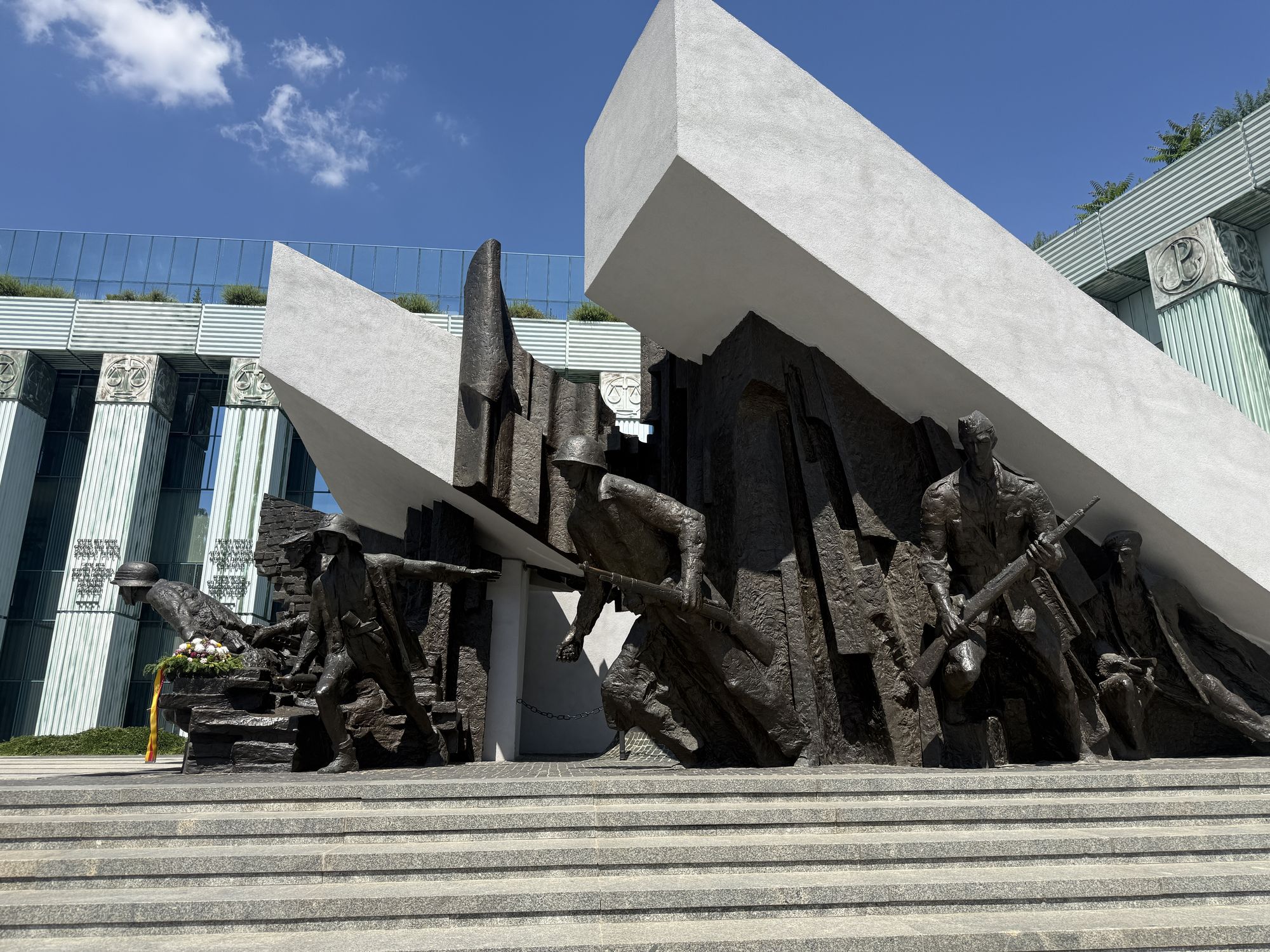
The Warsaw Uprising Monument, unveiled in 1989, commemorates the Warsaw Uprising of 1944 — the 63-day armed insurrection in which the Polish Home Army (Armia Krajowa) rose against the Nazi German occupation of Warsaw, only to be crushed in one of the most devastating battles of the Second World War. Approximately 200,000 Polish civilians died. The city was subsequently razed to the ground by German forces.
The sculpture by Wincenty Kućma and the architect Jacek Budyn depicts two groups of fighters: one surging upward in attack from the surface, the other descending into the sewers through which the insurgents escaped and retreated. The sewer detail is historically precise — the sewers of Warsaw became the final means of movement and escape as the surface of the city was systematically destroyed. The monument was unveiled on the 45th anniversary of the uprising, a date that coincided with the end of communist rule in Poland. The timing was not accidental: the uprising had been a politically awkward subject during the communist period, as the Armia Krajowa was associated with the London exile government rather than the Soviet-backed movement.